Stories
What the 2026 F1 Regulation Changes Can Teach UK Small Businesses About Adapting to Change
The 2026 Formula 1 season kicks off this weekend at the Australian Grand Prix in Melbourne, and for once, the word "historic" is not an exaggeration.
Every few seasons, Formula 1 hits the reset button. But 2026 is unusual in that there is a completely new engine formula and a new aerodynamic concept introduced simultaneously. Teams that dominated last season may not even make the top five this year.
Sound familiar? Because that is exactly what running a small business in 2026 feels like.
The rules change. The tools change. The algorithms change. The customer changes. And the businesses that thrive are rarely the biggest – they are the ones that adapt fastest.
Here is what F1's most dramatic regulation overhaul in history can teach every UK small business owner right now.
1. When the Rules Change, Yesterday's Winners Are Not Guaranteed Tomorrow
For years, certain F1 teams dominated because they had mastered the previous rulebook. They poured resources into perfecting a system that no longer exists. In 2026, the pecking order has been torn up entirely. Everyone starts from scratch.
This is one of the most important lessons for UK small businesses: past success does not protect you from future disruption.
The business that ranked number one on Google for five years can drop overnight when an algorithm update changes the rules. The retailer that thrived on Facebook ads is suddenly facing a completely different landscape. The consultant who built a reputation on a particular set of skills finds AI can now do a version of it in seconds.
The question is not whether the rules will change. They always do. The question is how quickly you notice – and how boldly you respond.
2. Adaptability Beats Resources Every Time
Here is something remarkable about the 2026 F1 season: it is not necessarily the richest teams that will win.
Lewis Hamilton – seven-time world champion – described 2026 as probably the biggest regulation change of his career, noting that the driver will play a central role in energy management, and that minor mistakes early in a race will have greater consequences down the stretch.
Experience and resources matter, yes. But under a new rulebook, agility matters more. A smaller team that interprets the new regulations cleverly can leapfrog a giant that is slow to adapt.
For small businesses, this is genuinely encouraging. You do not need the budget of a corporate to win under new digital rules. You need the right strategy, the right partner, and the willingness to move quickly.
At Harri Digital, the businesses we see growing fastest in 2026 are not the ones with the biggest marketing budgets. They are the ones that are willing to test, learn, and adjust – fast. Find out how we approach digital strategy for UK small businesses.
3. You Cannot Win by Staying in Recharge Mode Forever
One of the most fascinating technical changes in 2026 F1 is the new energy management system. The cars now run on roughly a 50-50 power split between petrol and electric, with the battery able to recharge twice as much energy per lap through braking or lifting off the throttle.
But here is the catch: the limited battery capacity means it is incredibly easy to deplete all electrical energy before the end of a straight. Drivers must harvest energy without sacrificing lap time, then deploy it as effectively as possible.
The business parallel is direct. You can spend months planning, researching, and preparing – harvesting energy. But at some point, you have to deploy it. Launch the new website. Publish the content. Run the campaign. Put the product live.
Too many UK small businesses stay in permanent recharge mode. They are always "nearly ready." The businesses that win are the ones that know when to deploy – and do it decisively.

4. New Entrants Can Disrupt Everything
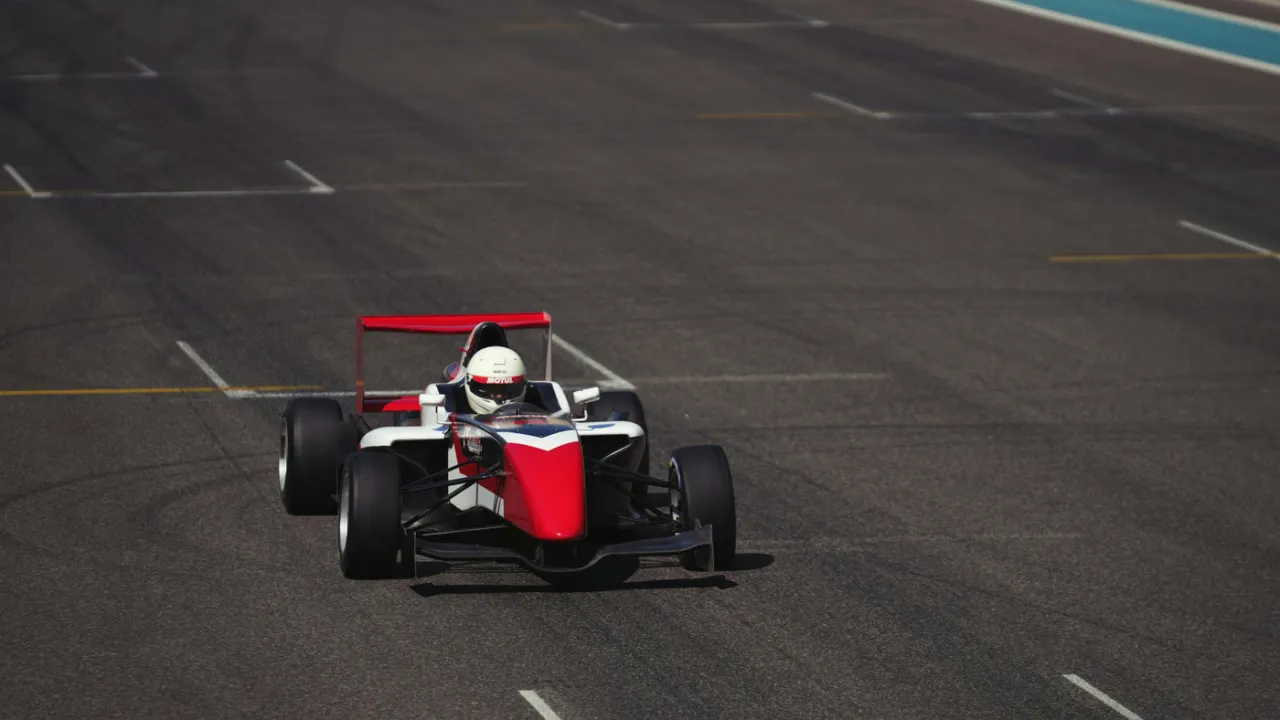
Three new engine manufacturers entered Formula One in 2026 alongside the regulation changes. Audi entered the sport for the first time. Ford returned as an engine supplier for the first time since 2004. Cadillac made their debut as a full constructor – the first new team since 2016.
The existing order did not invite them. The regulation change created the opening. And now the established teams have to race against competitors who did not exist on last year's grid.
Every UK business owner reading this has felt the equivalent. A competitor appears from nowhere – often digital-first, often cheaper, often faster. They did not beat you on experience. They beat you on timing and adaptability.
The right response is not to fear new entrants. It is to move like one. Stay lean, stay sharp, and make sure your digital presence is working harder than your competition's. Our free website health check is a good place to start.
5. Complexity Is Not an Excuse – It Is an Opportunity
Hamilton described the new regulations as "ridiculously complex," saying he sat in a briefing and felt he needed a degree to fully understand it all.
And yet – that complexity is precisely where the opportunity lives. When something is confusing, most people disengage. The teams that lean in, master the nuances, and extract every marginal gain from the new rules will dominate.
The digital landscape in 2026 is the same. AI tools, new search behaviours, evolving social platforms, changing consumer expectations – it is genuinely complex. Most business owners disengage, stick to what they know, and wonder why growth has stalled.
The ones who lean in – who get curious, ask the right questions, and find the right support – are the ones who pull ahead.
6. Active Aero – The Power of Real-Time Adaptation
Perhaps the most exciting technical change in 2026 F1 is the introduction of Active Aerodynamics. The cars can now adjust the angle of both front and rear wing elements depending on where they are on track. In corners, the wings stay in default position to maintain grip. On straights, drivers activate low-drag mode, opening the flaps and flattening the wings to boost top speed.
The car is no longer locked into one configuration. It reads the environment and adjusts in real time.
This is exactly how your digital marketing should work in 2026. Your website, your SEO, your content, your ads – they should not be set once and left. They should be responsive. They should read what is working, what the data says, what your customers are searching for this week, and adjust accordingly.
Static strategies are yesterday's car. Active adaptation is how you win.
7. Sustainability Is No Longer Optional
For the first time in F1 history, the 2026 power units run on Advanced Sustainable Fuels, made from carbon capture, municipal waste, and non-food biomass. F1 – the sport historically synonymous with excess and emissions – has committed to net zero by 2030.
If F1 can do it, there is no industry left with an excuse not to.
For UK small businesses, sustainability is increasingly a commercial decision, not just an ethical one. Customers notice. Google notices. Investors notice. And businesses that build sustainable practices into their digital infrastructure – from green hosting to lean, efficient websites – are ahead of where regulation and consumer expectation is heading.
We build all our client websites on green-hosted infrastructure. Find out more about how we work.
So – What Does Your Business Do With All of This?
The 2026 F1 season is a spectacle. But it is also a masterclass in what happens when the rules change and organisations have to respond at pace.
The winners will not be the ones who dominated last year. They will be the ones who read the new environment quickest, adapted their approach, deployed their energy at the right moment, and stayed agile enough to keep adjusting.
That is precisely what great digital strategy looks like in 2026.
If your website, your SEO, your content, or your marketing are running on last year's rulebook – it is time to review the setup.
At Harri Digital, we help UK small businesses, retailers, and startups adapt to exactly this kind of change. No jargon. No fluff. Just honest, practical digital support that drives real growth.
👉 Get your free website health check – no obligation, no hard sell.
👉 Browse our latest digital insights and guides.
👉 Talk to the Harri Digital team today.
Frequently Asked Questions
When does the 2026 F1 season start? The 2026 Formula 1 season begins this weekend with the Australian Grand Prix at Albert Park in Melbourne, with the race taking place on Sunday 8th March 2026.
What are the biggest changes in the 2026 F1 regulations? The 2026 rules represent the biggest regulation overhaul in F1 history. Key changes include a new 50-50 hybrid power unit, active aerodynamics with moveable front and rear wings, Advanced Sustainable Fuels, lighter and narrower cars, and the introduction of new teams including Cadillac and Audi.
What can businesses learn from F1's regulation changes? The core lesson is that adaptability beats resources when the rules change. Businesses that respond quickly to new digital environments – changing search behaviours, AI tools, platform updates – outperform those that rely on what worked previously.
How do I know if my business's digital strategy is still working? If your website traffic, enquiries, or online visibility have plateaued or declined in the last six months, it is worth getting an independent review. Harri Digital offer a free website health check with no obligation – a practical starting point.
What is active aerodynamics in F1 2026? Active aerodynamics refers to the new moveable wing system where cars automatically adjust wing angles depending on whether they are cornering (high downforce) or on a straight (low drag). It replaces the previous DRS system and is available to every driver on every lap.
How does F1 relate to digital marketing for small businesses? Both environments reward real-time adaptation, penalise those who rely on yesterday's tools, and create fresh opportunities for smaller, more agile operators when the rules reset. The 2026 regulation overhaul is a vivid and timely illustration of why standing still in a changing environment is its own kind of risk.
Harri Digital is a UK digital agency specialising in web development, SEO, eCommerce, and digital strategy for small businesses, startups, and retailers across the UK. Explore our services or get in touch to talk about your business.
Keep reading
More from the studio.
Super Bowl LIX Advertising Lessons for UK Businesses: What £7 Million Ads Teach You About Marketing
Super Bowl LIX advertisers spend £7 million for 30 seconds. Here's what UK businesses can learn from the world's most expensive ads about effective marketing.
NewsMeta Is Overtaking Google in Ad Revenue for the First Time: What UK SMEs Need to Know
Meta will overtake Google in global ad revenue in 2026 for the first time ever. Here's what the shift means for UK small businesses and their ad budgets.
Google's September 2026 Spam Update: How to Tell If Your Small Business Website Was Affected
Google's September 2026 spam update began on 24 September. Here's what's confirmed, how to check Search Console and what UK small businesses can do next.