News
Meta's UK Ad-Free Subscription: What It Means for Your Facebook Ads Strategy in 2026
Meta has introduced a fundamental change to how UK businesses can reach their audiences on Facebook and Instagram.
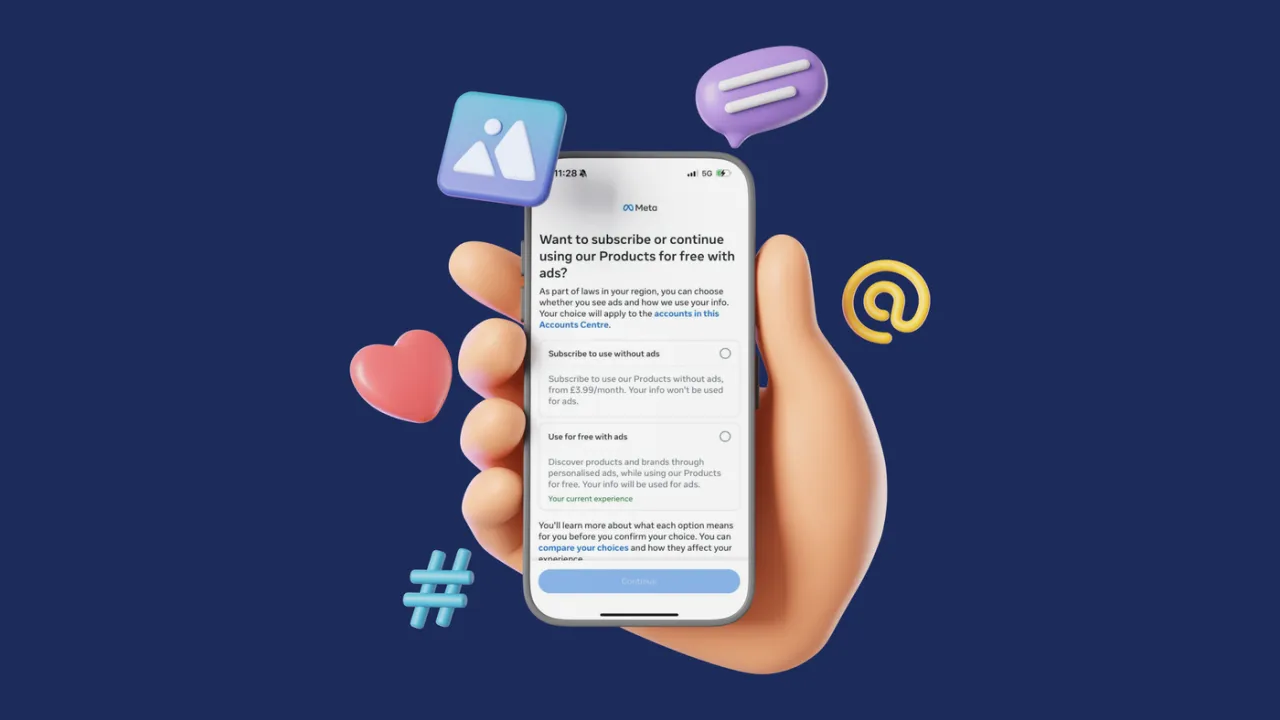
Users across the UK can now pay £2.99 monthly (web) or £3.99 (mobile apps) to remove all advertising from their Facebook and Instagram feeds. Those who subscribe no longer see your ads. Their data cannot be used for targeting. They've effectively opted out of your entire paid advertising ecosystem on Meta's platforms.
For UK businesses currently spending thousands monthly on Facebook and Instagram advertising, this creates an immediate strategic challenge. Your potential reach just became capped. Some portion of your target audience - potentially including your most valuable prospects - can now pay to never see your campaigns.
The question isn't whether this affects your advertising strategy. It's how significantly, and what you need to do differently to maintain performance whilst your addressable audience shrinks.
Understanding Meta's Ad-Free Subscription Model
The subscription operates as a binary choice for UK users. Continue using Facebook and Instagram for free with personalised advertising, or pay to remove ads entirely. There's no middle ground. Unlike the European Union version which includes a "less personalised ads" option, UK users either accept full targeting or pay for complete ad removal.
When users subscribe, their personal data stops being used for advertising purposes. They disappear from your available audience pool. You cannot target them. You cannot retarget them. You cannot use their behaviour data to inform lookalike audiences or optimisation algorithms.
For your first Meta account, the subscription costs £2.99 monthly when purchased via web browser or £3.99 through iOS and Android apps. The higher mobile pricing reflects Apple and Google's app store transaction fees. Additional accounts linked through Meta's Accounts Centre cost less - £2 monthly on web or £3 on mobile.
The pricing is deliberately positioned as accessible rather than premium. Meta emphasises this represents "one of the lowest" subscription costs in the market, making it viable for mainstream users rather than only affluent early adopters.
Who's Actually Subscribing?
The critical unknown is adoption rate. How many UK users will actually pay to remove advertising?
Based on EU rollout patterns and comparable subscription services, industry analysis estimates 2-6% of UK users may subscribe initially. This range aligns with subscription adoption rates on platforms like YouTube Premium and Snapchat+, where paid tiers typically attract low single-digit percentages of total users.
However, several factors could push UK adoption higher or lower than EU patterns. The significantly lower UK pricing (£2.99 vs €5.99+ in EU) reduces the financial barrier. Younger users aged 18-24 express higher willingness to pay for ad-free experiences, with research indicating over 40% state they're likely to subscribe. Privacy-conscious demographics may adopt faster than general population averages.
Conversely, the "free bias" remains powerful. Decades of conditioning have taught users to expect social media without payment. Asking users to suddenly pay for something they've always accessed free faces significant psychological resistance.
The reality is nobody - including Meta - knows precisely how many UK users will subscribe. Meta hasn't published EU adoption figures, though subsequent price reductions and the addition of "less personalised ads" options suggest uptake was modest.
For UK advertisers, this uncertainty demands scenario planning. Prepare strategies for low adoption (2-3%), medium adoption (5-8%) and higher adoption (10%+) rather than hoping a single outcome materialises.

Immediate Impacts on Your Facebook and Instagram Advertising
Even modest subscription adoption creates measurable effects on campaign performance.
Reduced Audience Reach
Your total addressable audience on Facebook and Instagram shrinks by whatever percentage subscribes. If 5% of your target demographic opts for ad-free subscriptions, your potential reach drops by that same 5%.
This might sound minimal, but the impact compounds across campaign objectives. Awareness campaigns struggle to achieve the same impression volumes. Retargeting campaigns lose portions of their audience pools. Lookalike audiences build from smaller seed segments, potentially reducing quality.
For businesses targeting specific demographics where subscription adoption runs higher - younger audiences, privacy-conscious segments, higher-income professionals - the reach reduction could exceed platform averages substantially.
Audience Composition Changes
Subscribers aren't randomly distributed across your target market. Research suggests adoption skews toward higher-income users, younger demographics and privacy-conscious individuals.
If your most valuable customer segments disproportionately subscribe to remove ads, your remaining reachable audience may skew lower in value. You're left advertising to audiences less likely to convert or spend at the levels your business model requires.
This creates a challenging dynamic. The users most willing to pay £3-4 monthly for better online experiences might also be the users most likely to pay for your premium products or services. Losing access to these high-value prospects through advertising whilst competitors reach them through other channels creates competitive disadvantage.
Cost Implications
Reduced inventory typically drives increased costs. With fewer available ad impressions as subscribers opt out, competition for remaining placements intensifies.
Industry analysis suggests cost-per-acquisition could increase 2-8% as auction dynamics adjust to reduced supply. The exact impact depends on adoption rates, advertiser response and Meta's algorithm adjustments.
Additionally, campaigns optimised for broad reach now hit ceiling constraints sooner. Frequency increases faster within your reachable audience, potentially leading to ad fatigue and declining performance before you've achieved your reach objectives.
What Changes for Campaign Strategy
The subscription model doesn't just reduce numbers - it requires rethinking fundamental campaign approaches.
Targeting Becomes More Critical
With reduced audience pools, targeting precision matters more than ever. Every impression wasted on low-intent users represents opportunity cost you can't afford when total reach is constrained.
Broad targeting strategies that previously worked through sheer volume become less viable. Tighter audience definitions, better exclusion logic and more sophisticated segmentation separate efficient campaigns from wasteful spending.
This demands deeper understanding of who actually converts. Review historical campaign data identifying demographics, interests, behaviours and custom audiences delivering best return. Double down on proven segments whilst aggressively excluding audiences demonstrating poor performance.
Consider implementing more rigorous testing frameworks. Rather than launching campaigns to broad audiences hoping algorithm optimisation finds the right people, test smaller, more defined segments first, then scale only those showing genuine performance.
Creative Quality Becomes Make-or-Break
When you can't simply buy more reach to compensate for mediocre creative, every ad must work harder. The subscription model intensifies existing trends toward quality over quantity.
Users remaining on the ad-supported platform have actively chosen to see advertising rather than pay for its removal. This doesn't mean they welcome all advertising - it means they've accepted advertising as the trade-off for free platform access.
Your creative must justify that decision. Ads that provide genuine value - entertainment, education, relevant offers - perform better in this environment than interruptive, sales-focused creative.
Consider creator-led content that feels native to platform experience rather than obvious advertising. Invest in production quality that stands out in increasingly crowded feeds. Test formats users actually engage with - Stories, Reels, video content - rather than defaulting to static image ads.
The era of mediocre creative subsidised by cheap reach is ending. Businesses that continue relying on interruption rather than value creation will struggle as audience pools shrink.
Measurement and Attribution Require Scrutiny
As your reachable audience contracts, accurate measurement becomes critical for understanding whether campaigns actually drive business outcomes.
Review your conversion tracking implementation. Ensure Meta Pixel and Conversions API are properly configured. Every missed conversion event represents lost optimisation signal when working with smaller audiences.
Consider implementing incrementality testing to understand true campaign impact beyond last-click attribution. With reduced reach, proving that advertising generates incremental revenue rather than claiming credit for sales that would have occurred anyway becomes increasingly important for justifying continued investment.
The Organic Content Imperative
Subscribers still see your organic content. They still engage with posts, Stories, Reels and videos you publish without paid promotion. They remain reachable through content marketing, community building and creator partnerships.
This makes organic social strategy newly critical. For years, declining organic reach pushed businesses toward paid advertising as the primary Meta strategy. Now, businesses need organic approaches to reach audiences opting out of advertising.
Invest in content that drives genuine engagement. Build communities around your brand that subscribers want to participate in regardless of ad exposure. Develop creator relationships and influencer partnerships reaching audiences through authentic recommendations rather than paid placements.
This doesn't mean abandoning paid advertising - it means recognising paid and organic strategies must work together to maximise total reach across both subscribing and non-subscribing audiences.
Preparing Your Business for the Subscription Era
Rather than waiting to see how adoption unfolds, proactive adaptation positions you ahead of competitors still hoping the impact stays minimal.
Audit Current Campaign Performance
Before making changes, establish clear baseline metrics. Document current reach, frequency, cost-per-result and conversion rates across your campaigns. Track audience sizes for your key targeting segments.
These baselines let you identify when subscription adoption starts affecting performance and quantify the actual impact versus general market fluctuations or seasonal changes.
Review audience composition in successful campaigns. Identify whether you're heavily dependent on demographics likely to adopt subscriptions at higher rates. If your best customers skew young, affluent or privacy-conscious, prepare for above-average impact.
Diversify Beyond Meta
Over-dependence on Facebook and Instagram advertising creates vulnerability when platform dynamics shift. The subscription model reinforces why balanced digital marketing investment across multiple channels reduces risk.
Google Ads reaches users during high-intent search moments. TikTok captures younger audiences through different creative formats. LinkedIn delivers B2B reach. Programmatic display extends beyond social platforms.
No single channel replacement delivers everything Meta provides, but diversified investment ensures your entire acquisition strategy doesn't depend on access to audiences who might opt out of one platform's advertising.
Invest in Owned Channels
Audiences you own outperform audiences you rent. Email lists, website traffic, customer databases - these assets remain yours regardless of platform subscription models.
Focus on converting social audiences into owned relationships. Use Meta advertising to drive email subscriptions, website visits and account creation rather than solely pursuing direct sales. Once prospects enter your owned ecosystem, you reach them regardless of their Meta subscription status.
Build content strategies driving organic traffic through SEO. Invest in website optimisation that converts visitors efficiently. The subscription model makes owned channels more valuable as rented platform access becomes less reliable.
Strengthen First-Party Data Strategies
As subscriber data becomes unavailable for targeting, the first-party data you collect directly from customers becomes disproportionately valuable.
Implement robust data collection processes. Use Meta's Conversions API to share customer event data directly with the platform, supplementing pixel tracking. Build customer data platforms consolidating information across touchpoints.
Create customer segments based on actual behaviour and value rather than platform-provided targeting proxies. Upload these as custom audiences for more precise targeting of your known high-value prospects.
First-party data strategies require more sophisticated infrastructure than simply relying on Meta's targeting tools, but they create competitive advantages as platform-provided signals diminish.
Test Smaller, More Frequently
Keep reading
More from the studio.
Facebook's New Link Limit Is Here: What UK Businesses Need to Do Right Now
Meta is limiting Facebook links to 2 posts per month without Meta Verified. Find out what this means for UK businesses and exactly how to adapt your strategy now.
Google Is Putting Ads Inside AI Overviews: What It Means for Your PPC Budget in 2026
Google now shows ads inside AI Overviews, not just below them. See what's changed and how to adjust your PPC budget and strategy for 2026.
NewsChatGPT Now Has Ads - What It Means for UK Businesses
ChatGPT launched ads in February 2026. Here's what UK businesses need to know about the shift – and how to protect and grow your digital presence now.